


Get the inside scoop on ‘Weavingshaw’!
Heba Al-Wasity is the author of our February Adult ‘Forbidden Bargains’ featured book: Weavingshaw. Read on to get the inside scoop from inspiration to favourite scenes and more!
What was the initial spark that inspired Weavingshaw?
It happened when I was a teenager. I have two older sisters, and the eldest was inspired by gothic writers, and she said to me and my other sister to write about a building that has a soul. So my sister went on to write about a school that was very haunting, and I thought and wrote about Weavingshaw. But I never thought I’d actually write it, I never thought I was a writer until I graduated medical school during COVID, super depressed because that was really tough. And because I was depressed and I couldn’t sleep, I started writing. I didn’t think anyone would read it, I wrote it for fun!
Weavingshaw is steeped in a gothic and dark atmosphere. What drew you to write a gothic book?
I’ve always loved gothic books, and I had a minor obsession with Jane Eyre at one point in my life. I’ve read the book, watched every adaptation, and loved them all! But I also live in the North of England, so the moors and all the gothic elements very naturally come to my writing. But I didn’t realise I was writing a gothic book until an agent told me this is a very gothic book, and I was like yeah! It is! So I went back and added in a lot more gothic elements to really give it the atmosphere. And I had the most fun with it, making it as gothic and as melodramatic as possible!
Did you do any research into real life cities or historical eras in order to vividly portray Leena’s life and upbringing?
I’m really bad at names, so I just take my notebook everywhere and if I find a name I like, I jot it down. So a lot of the names of places in the book are inspired by different wards I’ve worked in, such as Golborne which was a ward at a psychiatric hospital that I worked in. I just so happened to be needing a name for a city, and I just used Golborne! And it’s funny because I worked in Wigan, and a lot of people from there have said they are finding a lot of similarities between where they live and in my book, and I’m like yeah, that’s directly where I was inspired! And I’m very lucky to live by some amazing museums, as the North of England has a huge history with the industrial revolution. I’ve gone to different museums to really get myself inspired, learn the history, and be able to weave that in a bit better.
One thing we loved about Weavingshaw was Leena’s immigrant experience, and we know a lot of her story is based on your familial experiences. What made you decide to explore that particular theme?
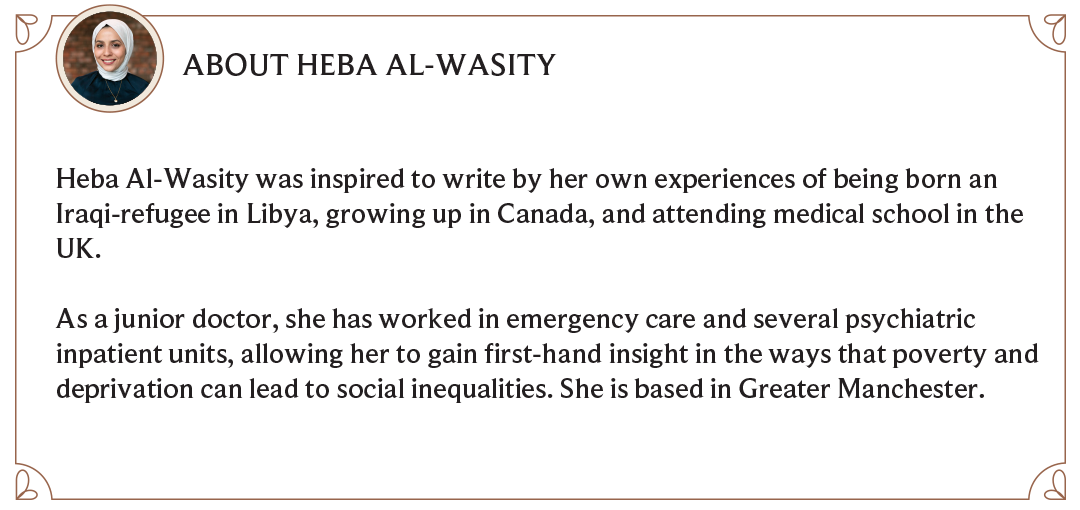
I’m Iraqi. I was born in Libya, we moved to Canada, and then moved again to England. So I’ve be displaced, I’ve moved around and I’ve never been settled for long. So I think that very naturally went into my writing and into the construction of Leena, that feeling of searching for a home but never quite finding one. And I think a lot of kids of immigrants feel that, feel caught between two cultures. But I never really read about that growing up, and I would have loved to see that kind of representation! So I think once I realised that Leena is a daughter of an immigrant, it became much easier to understand her motivations and why she does the things she does. I wanted to have people feel represented by her.
Of the back of that question, we found Leena’s desire to keep her language, family, and country’s history alive very endearing. When it came to Algaraan, how did you go about crafting the language?
I based it a lot on Arabic. I grew up speaking Arabic, but because I had a hard time learning to read when I was a kid — I’m dyslexic, but they blamed it on me speaking Arabic at home — my parents stopped speaking Arabic. They switched to English, so I lost a lot of the language. I’ve regretted that so much, because I have a hard time communicating to people from my background, even my parents and my in-laws. It’s just something that I wish I knew more of, so when I go back home to Iraq I’m able to speak to my people. Because now I feel so much further away from my own homeland, I gave Leena similar struggles, of wanting to connect yourself with the land you never see. But at the same time, it gets harder to learn a language as you get older.
A few other themes Weavingshaw touched on were duty, family, and sacrifice. Were those themes you knew you wanted to explore from the very beginning, or did they develop as you wrote?
I think those themes came fully formed for me and I did want to explore them from the beginning. I’m just so interested in how power is inherited, especially with the higher ups. Like, there’s only a small portion of power, and it gets inherited from father to son, and that’s happened from the beginning of history. I’m just so fascinated by it, because a lot of the time it’s the wrong people inheriting power. So I really wanted to explore those themes in this book, about what power is, and the lengths we would go to, to try and keep it. And a lot of the time we think we’re doing duty to family, but a lot of time it’s duty to power, to try and maintain it.
What was the most challenging part about writing Weavingshaw?
Probably Leena, as it took me a while to figure her out. Before I realised she was very similar to my sister, which made her much easier to write, I had a really hard time getting her voice. I wanted to make sure she was a very well formed character with her own agency, her own thoughts, her own good things and bad things, and her weaknesses as well. I didn’t want her to be a silent character like a male hero, I wanted her to be a driving force!
Let’s talk about St. Silas. What a magnetic character! He was sharp and always one step ahead, which utterly fascinated us. How did you create such a commanding, and quite terrifying, character?
He actually came to me fully formed. From the moment I thought of him, I knew about his backstory and what drives him. I wanted him to display his cleverness, so I knew how clever and cruel he was. Writing him, especially his dialogue, was so fun for me and it always came very smoothly. After thinking of Weavingshaw, I think he was the first character I thought of, so everything else came afterwards. I think his first dialogue in the first few chapters has remained the same from the very first draft!
If you could go for dinner with any one of your characters, who would you choose and why?
I would choose Leena, because it would be like going to dinner with my sister! But also, Mrs. Van probably. She would hate me in the beginning, but I think she would warm up to me!
What do you hope readers take away from Weavingshaw?
The meaning of home. I think all the characters are searching for homes in different ways, learning that home is not always a place and that it’s sometimes other people, and that you can find home wherever you are.
Is there anything you can tell us about book 2? Weavingshaw really left us on a cliffhanger!
The relationship develops way more. And there’s one big secret that comes out that is going to be slightly devastating!
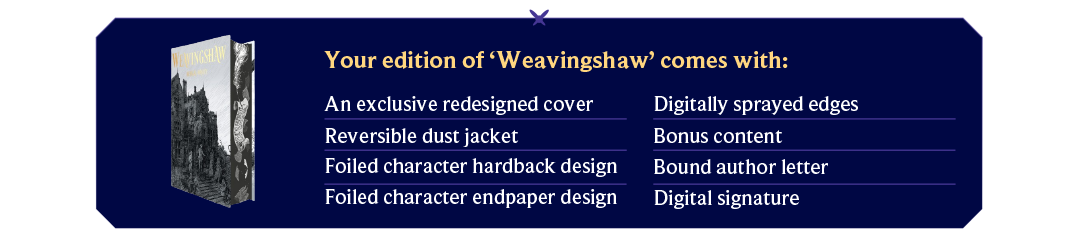
What is your favourite thing about the FairyLoot Edition of Weavingshaw?
Isn’t it just so gorgeous?! I Love it so much! I love the front cover, but I also love the gold foiling. It’s so beautiful and gothic.
Author Recommends
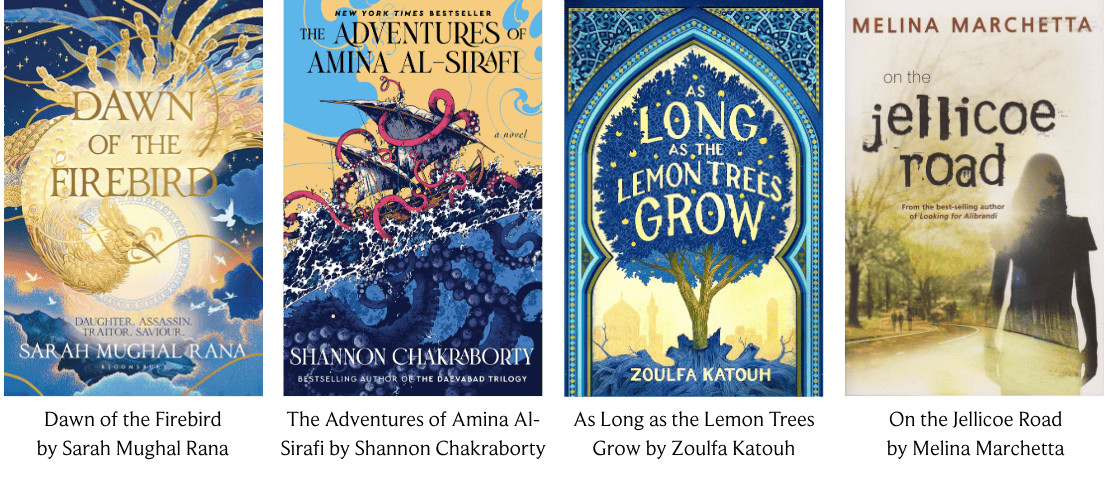
Have you ever wondered which books your favourite author thinks are an absolute must read? Well, wonder no more! Here are four books Heba Al-Wasity thinks everyone needs on their TBR:
Blog Post Copied to Clipboard
Most Recent Stories

Community Features
Dark & Delicious Gothic Fantasies to Sink Your Teeth Into
Jenni
14th October 2026
Follow Us
Most Recent Stories
Community Features
Dark & Delicious Gothic Fantasies to Sink Your Teeth Into
Jenni
14th October 2026
Follow Us
-

Community Features
Dark & Delicious Gothic Fantasies to Sink Your Teeth Into
Jenni
14th October 2026
-

-


Conversation
0 Comments