


Get the inside scoop on ‘The Tower of the Tyrant’!
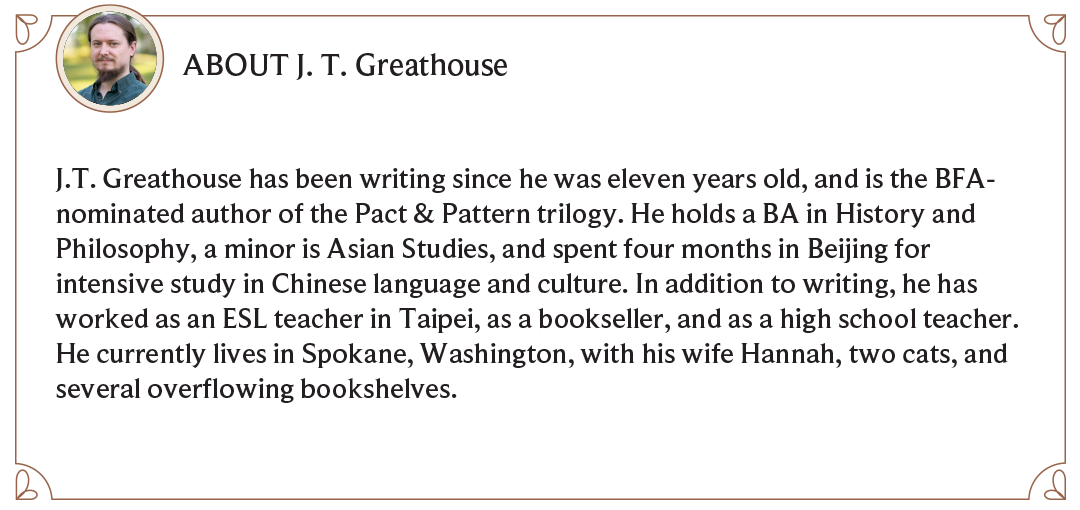
J. T. Greathouse is the author of our November Epic ‘Whispers and Wraiths’ featured book: The Tower of the Tyrant. Read on to get the inside scoop from inspiration to favourite scenes and more!
If you could describe The Tower of the Tyrant in three words to someone who hasn’t had the chance to pick it up yet, what would they be?
These kind of questions always throw me, as I wrote 180,000 words and now I have to boil it down into three! But I think I would call it spooky, humane, and epic. Which is sort of a cop-out, but it is very epic!
The Tower of the Tyrant is set in such a vivid and, as you’ve said, epic world! Can you tell us a little bit about how you came up with it?
A lot of it came from reading Iain banks’ Culture novels. They’re this classic 80s/90s science fiction space opera that laid a lot of the ground work for what we now think of as space opera, with those big, galactic civilisations and all that. But what I find really interesting is how Banks has built his world around one society which has basically solved all of life’s problems through technology. They live in this utopian, socialist civilisation, but they’re surrounded by other societies that don’t buy into their thinking. And so even though their lives are essentially perfect, there’s this constant threat of people who don’t like what they’re doing and want to stop them. I thought that was a cool structure to have in a fantastical setting, so I basically used that, then it was just a matter of building out those other surrounding societies and cultures. And then when I had the idea of all these magical artefacts and things being left behind, it gave me a lot of freedom to be like well, it would be cool to have people with four arms who are seven and a half feet tall, I’m just going to throw them in there and say the First Folk made them. Then I gave them their own place in the world and cultural importance in the different countries that they might exist in. Then there was the question of how do different groups of people react to all the stuff that the First Folk left behind. You have the people like Fola who are like, this sounds awesome, and they want to figure out how it works so they can use it. Then, you have the people from the Mortal Church who have the opposite reaction. They’re like nah, we don’t trust any of this stuff because we don’t know how it works or where it came from. So then they try to destroy it and wipe the slate clean so that humanity can build the world how they would like it to be instead of just living in the ruins that the First Folk left behind. So a lot of it just came down to the initial premise of magical stuff left behind, and how that would shape cultures, attitudes, and people.
The city essentially has everything you need — there’s no real poverty, starvation, or anything that humanity really suffers with. Why are there people on the outside not buying into that?
That has to do with the fact that we could, in our world now, radically eliminate a lot of the poverty, hunger, and suffering that exists, yet we don’t. And a lot of why we don’t has to do with who controls those things, who controls the money that we would need in order to get rid of all of those problems. In the world of Thaumedony, not just the city, there are a number of different reasons why people might not buy into it. One of them is that they just don’t believe that it’s real. It’s hard to accept that something like that is possible if your life is very different and difficult. They think it couldn’t possibly be the case — they may hear rumours of this city where no one suffers, but everyone they know suffers so it must be a lie. Or, you live in a place where you never even hear those rumours, because there’s people in power who are very careful about keeping that away from you. The next book is actually set in the city, and the one after that is going to primarily be from the point of view of those who are most antagonistic to the city. I’m really looking forward to exploring those questions of why people don’t believe in it or why they want to reject it. Sometimes it’s selfishness, sometimes it’s disbelief, sometimes it’s moral outrage that the First Folk left one part of the world with a utopia and left chaos everywhere else. But it’s a complicated thing and it’s different from person to person and place to place.
The Tower of the Tyrant felt very nostalgic and reminiscent of the epic fantasy books most of us read growing up. Other than Iain Banks who you have already mentioned, were there any other authors you took inspiration from?
Yes! I feel like every author is a sort of distillation of all the stuff they’ve previously read and loved. I obviously grew up reading Wheel of Time, and there’s a lot of Robert Jordan in this — the whole concept of there being magical stuff left behind and people who are dedicated to figuring that out. Also, I really like Steven Erickson’s The Malazan Book of the Fallen series, and one of the things I really like about him is his diversity of different cultures and fantasy races, and I really wanted to capture some of that. I’m also always drawing on (Ursula K.) Le Guin, and the way that some of the magic works in this world is a little bit Earthsea-ish if you read between the lines and below the surface. And Brandon Sanderson is inescapable! The idea of having a magic system — that’s Brandon Sanderson! I’m trying to do it in a slightly different way, but I think he definitely made people think harder about how they put magic on the page.
The book explores a wide range of well known folklore creatures and we noticed some Welsh mythology inspiration in there as well. What was you reason for pulling on those classic folk tales as opposed to creating your own new and fantastical creatures?
I think part of it is one of the things I like about Wheel of Time and Malazan is how the fantastical elements are drawing on real mythology to some extent. You read the folklore that’s present in Wheel of Time and you think, that’s just King Arthur, but it’s with a twist. And Jordan is doing some commentary on mythic cycles of history and stuff like that, but I just enjoy that feeling of recognising. Like, oh I know what that is! So I like pulling in real world mythology and folklore into my fantasy worlds to try and create that effect for readers. And for this book there’s an interesting backstory. It actually started as a short story that was just the Llewyn and Siwan part at the beginning, which was published in 2022. And then when I was working on this and writing the Fola stuff, it just didn’t feel complete. It felt like there needed to be another angle, so I went back and looked through some other things I had worked on for inspiration. I discovered that that short story was perfect, so I started folding it into the novel. Originally, that short story was just me exploring the idea of people interacting with fae. There’s a common thread in Celtic folklore using sacrifices as a path to power, and I wanted to play with that a little bit in the short story, and the themes just fit with the rest of what came to be The Tower of the Tyrant really well. So it wasn’t an intentional thing to have it be a Celtic-inspired novel, it was just that I had already done something inspired by that which I could take, reformat, and reconfigure into a part of this book. And because of that, the kingdom became Welsh-inspired and so on.
Let’s talk world-building! The politics within the story was something we deeply enjoyed. We’d love to find out how you navigated writing the political conflict we see, and how you made sure everyone was where they needed to be, without making it too convoluted and hard to follow.
I’m not 100% sure that it’s not a little bit convoluted! My focus in writing this kind of political plot is always on identifying what is the faction, who is the representative of that faction, what does the faction want, what do the other factions want that are in opposition to that, and then what is the interpersonal dynamic between the representatives of the factions. So to actually breakdown how I wrote it, it was more thinking about the characters who were in the room talking about these things, doing the conspiring, and trying to push their political agenda, more than it was thinking about the politics itself. But those political agendas are part of those characters backstories and motivations, and so when they’re interacting with each other and they’re at cross purposes, those political conflicts come through. And as far as making sure it didn’t get convoluted — it was, in the first draft, way too convoluted. There was even more scheming going on in the kingdom itself which I just got rid of. It really comes down to thinking about where the fracture points that people might be angling for political influence or whatever are, and who doesn’t want them to succeed in doing that. Who is trying to defend the status-quo, who is trying to make change, and what are the different levers that people can pull to make their political agenda happen.
How did you develop the magic system and mythology of your world? Did it come fully formed, or did it evolve as you wrote?
So the basic concept for the magic in this setting is something that I’ve had in my mind since college, so for like a decade. I was a Philosophy and History major, and I had to take a senior seminar course where I had to pick a philosopher of history and do a deep dive on them. As a part of that I read a lot of Michel Foucault, who has this concept on the archeology of knowledge. The basic idea is any knowledge system, any way of understanding or thinking about the world such as the discipline of history itself, or sociology, or even physics for example, has certain rules or laws about how knowledge is created and what counts as evidence. And if you’re going to participate in that conversation and generate knowledge within that discipline, you have to do it by following these rules or you can add to the discourse by introducing new rules in some way. This lit my brain on fire because I was a big nerd, and I started thinking about how that would work in a world where there’s magic. Because if the magic exists, then it’s this objective anchor point to reality. Like, if I do this thing, then I get this magical result. And so this book is me trying to do Foucault to magic, saying there is magic, but the magic only works so far as you think it works. You have to have a system, a discourse, that allows you to essentially trick yourself into thinking that the thing you’re doing to create a magical affect will have the effect you think it’s going to have. And so, there’s lots of different magic systems layered on top of that basic magic. You have the reality of how the magic works, and then you have different ways of making it do things, based on different ways of thinking about it and understanding it. So you have the magic system in Thaumedony, and you have another way of doing it in Parwys, and so on and so forth. The twist is, the more you recognise that the way you’re doing magic is artificial, the less effective the magic is. You have to genuinely believe it works, and if you designed the system, you know it’s fake. You can’t actually use it. That original idea came almost fully formed after reading all this post-modern philosophy, and then the different ways of accessing it were built one by one like individual magic systems. It was a lot of fun to do, and I hope people think it’s cool!
Off the back of that, what was the hardest part about writing that magic system?
I think the hardest part was trying to make it feel like none of these different magic systems were inherently stronger than any of the others. Like the magic that Fola uses is super broad in its application, she can basically do anything theoretically. Whereas for the people from the Mortal Church, their magic if much more limited and there is very specific things that they can do. So the trick was figuring out why Fola can’t win every conflict immediately, and figuring out the limits of the magic itself and her as a person, as well as what materials she needs to make it work and what knowledge does she need to have to do any given spell. And so once you start writing the book instead of just thinking about what you’re doing theoretically, you have to start answering those questions so you can write a scene where people fight so it’s interesting. That was the trickiest part!
The Tower of the Tyrant follows a wide cast of characters. Which character came most naturally to you and which one was the hardest to write?
The easiest one to write was definitely Llewyn, but that’s because his character is the most singular in focus. He basically has one thing that he cares about, and so any given scene from his point of view was going to be centred around that one thing. That made it easier to come up with a dramatic situation for him to be in. The most difficult to write was definitely Torin, in terms of figuring out his scenes and figuring out how I wanted him to come across on the page. But he was also really fun to write because he’s such a b******! As an author, it’s so fun to write a character like that because you can just make them say or think horrible things and know you’re going to get a reaction from readers. But figuring out what do I want him to do was difficult. Because for a lot of the book, he’s just kind of scheming and not actively doing a whole lot, but at the same time a lot of the politics stuff comes from his point of view. But I had fun writing all of the characters, there was no one that was a drag to write.
If you could travel with any one of your characters, who would you pick and why?
Frog, specifically for he’s a magical bird. Because I wouldn’t need anything else! I can just go wherever, and if I need a plane ticket, he can just make me a plane ticket, and the same goes if I need money! So definitely Frog, but if I’m not allowed to choose a bird that is literally like a magical Swiss army knife, I think I would choose Fola as I think she would make the best travel companion. She’s nice and witty, and I think travelling with Torin would make me really upset a lot of time. I don’t think Owyn has the free time to go on a trip right now, and I think Llewyn is a little bit neurotic and might get on my nerves!
If you could give aspiring writers any piece of advice, what would it be?
That is a hard question to answer, because I feel like the publishing industry is in a very different place than when I first started. But I think the best advice I can give is focus on writing things that you would want to read. I have the most fun writing when I’m writing a book that I wish existed and no one else was writing. Whereas I’ve had the most frustrating time writing when when I’m trying to write something that I feel like will fit the market. From an artistic point of view, you should be having fun! You should be enjoying what you’re doing on some level. So I would say follow the fun, and if it sells, awesome! And if it doesn’t, self publish it. We live in a world where no one can predict what the publishing industry is going to be doing in six months time anyway.
What’s your favourite thing about the FairyLoot edition of The Tower of the Tyrant?
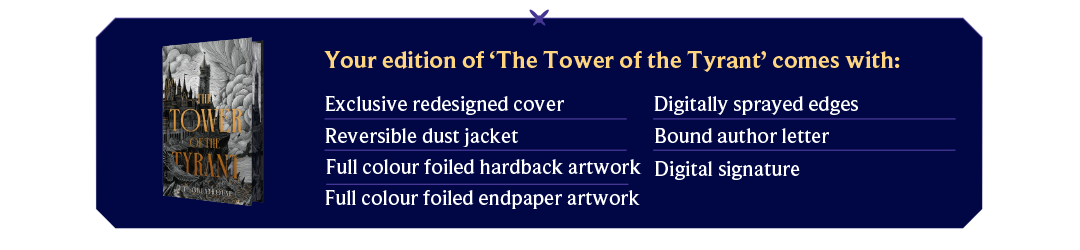
It’s a really great edition! It’s very beautiful and I have a hard time choosing, but I think the hard cover illustration itself is so cool. That map, I did a rough sketch of it when I was writing the book. And then my wife, Hannah, who is an illustrator actually did a version of it that’s in the book itself. And so it was really cool to see how that got even further evolved and gilded and put on this cover. And it just looks really cool!
Author recommends
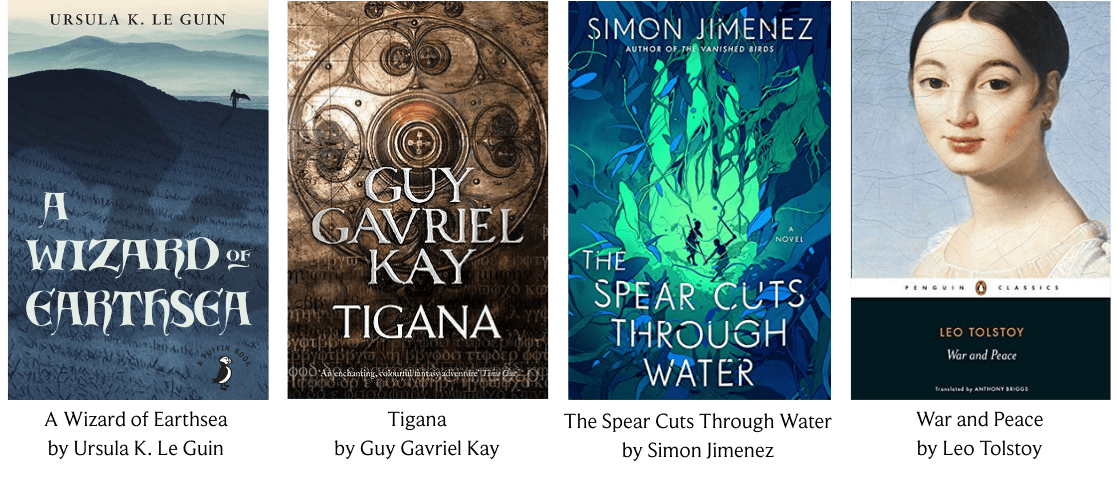
Have you ever wondered which books your favourite author thinks are an absolute must read? Well, wonder no more! Here are four books J.T. Greathouse thinks everyone needs on their TBR:
Blog Post Copied to Clipboard
Most Recent Stories

Follow Us
Most Recent Stories
Conversation
0 Comments