



Over the years, we’ve been ever so lucky to work with so many wonderful authors! From those just kickstarting their career with a breakthrough debut to the most popular names in the fantasy genre, it’s been an honour to create such special editions of their work and to be a part of their publishing journeys. 📚
We also absolutely adore hosting our Fairy Chats, a series of Instagram Lives in which we discuss the magical books featured in our subscription boxes with their authors! Not only do we dive deep into those specific stories and their enchanting customisations, but we also indulge in conversations on the writing process, providing insight and advice for all you aspiring authors out there! 🖋️
If you’re looking for tips and tricks to help improve your writing skills, or you’re just intrigued by how your favourite writers produce their work, we’ve collated some of the best snippets and advice these authors have shared with us over the years below. And if you’re interested in catching up with the full conversations, head over to our Reels Tab on Instagram where we save all of our past Fairy Chats. Or, you can find written versions of the interviews here. 💜
… On Developing Writing Style and Tone
“When I went to uni, I actually studied English and Creative Writing. You don’t need to have a degree in creative writing to write books, but one really good benefit of doing that was we used to really closely examine other author styles a lot. That included fiction writers like Angela Carter and Charles Dickens, but also authors of poetry and screenplays, amongst other things. And sometimes our assignments or an activity in class would be to write a short story using the style of a particular author. I mentioned Angela Carter because I really enjoyed it when I wrote a short story in her writing style, which was kind of dark, gothic, lush and descriptive. Getting to look at what makes that author’s style and getting to try out the techniques they used was a really good way find out what I liked, as well as what worked naturally for me. It was like trying on lots of outfits! And then over time, I think my natural voice as a person has come through more in my writing — I’m quite sarcastic and like a bit of banter and things like that, and so those things have come out more and more in my books over time as well.” — Clare Sager, author of King of Ravens
“I don’t think I ever sat down and said ‘this is going to be my writing style’ at any point in my career. Air Awakens was my debut, and I started writing it for fun. I did not write it thinking I’m going to be a published author or I’m going to model myself after another author and their career. I think my style developed through learning. Anything you do a lot of, you get better at it. It has been a journey and a constant evolution.” — Elise Kova, author of Arcana Academy
… On Writing Processes and Routines
“I tend to start with a lot of research, and I like to start with a large pool of information and knowledge that seems relevant to the subject matter, reading any books or articles I can get my hands on. And then when I feel ready, I start drawing ideas, but I have to have a very deep pool to draw from. I don’t like to draw from a shallow pool where I’m having to jump to conclusions, so that’s when I’ll sit back and think I have to go back and do more research. Then I move into the drafting phase, where I start outlining things to get an idea of the feeling, the ambiance, the atmosphere, whose perspective I’m writing from, what this character is like, whether I’m going to be writing in first or third person, etc. I’ll start experimenting to feel out the right recipe to create the story I’m wanting to tell. Once I get to the revision phase, that’s when I know I’m going to be working on a particular chapter or scene, I use music to get into the headspace. I’ll be running full scenes in my head, whilst listening to the music, really trying to sense of how I want the story to be and what the feeling is that I want to communicate.” — SenLinYu, author of Alchemised
“I draft roughly to get a sense of key plot points, of where the story is going, but I prefer to leave room for events and characters to develop and evolve. There are times when the characters will surprise me, and then I’ll need to shift things accordingly to fit the new direction or to rewrite to ensure a natural progression.” — Sue Lynn Tan, author of Never Ever After
“I like to call myself a discovery writer. As much as I’d love to be a planner with a super detailed outline, my brain just does not work that way. I usually write the first 10-20,000 words without any sort of outline, and once I discover the characters and world a bit better, I can start creating a (flexible) outline for the rest of the book!” — I. V. Marie, author of Immortal Consequences
“I sometimes start with just wanting to explore my characters feelings, or I just want to sit down and and have fun and play. Playing in my notebook continues to be the most magical part because I feel like when I’m just putting pen to paper, and discovering the story for the first time, I feel like I never know what I’m going to find! Revising is also fun because I love perfecting it and cleaning it up because drafting feels so messy, but I also feel like it’s a treasure hunt whenever you sit down.” — Stephanie Garber, author of Alchemy of Secrets
“I rigorously plan all of my books in a kind of insane spreadsheet, which makes drafting so much easier. But sometimes after Act One the characters grow minds of their own. They start acting like bratty little teenagers, refusing to say the dialogue I write for them and insist on fighting each other on the page, or they start bantering for twenty pages and lose all sense of the plot. It’s a headache for me and my editor, but I hope the readers love it!” — Molly X. Chang, author of The Nightblood Prince
“I’m definitely a planner. I have a plan for the whole book, then individual mini plans for each chapter, which I’ll adapt and flesh out as I go along. This allows me to stay on track, and is also really helpful in terms of structuring the plot, tracking character development and planting clues for big reveals. Having said that, some of my favourite parts of Heir of Storms have been unplanned – an example being Blaze’s chaperone, Spinner, who just appeared on the page one day and made it clear she was there to stay!” — Lauryn Hamilton Murray, author of Heir of Storms
“I like to write a short 1-2 page synopsis before I start writing a book that includes the opening image, inciting incident, midpoint, climax, and ending image. And I’ll always have certain scenes that I’m most excited to write before I start. Knowing those bigger moments helps give me direction, and then having those specific scenes makes me excited to reach them. I then start from the beginning and write the first draft chapter by chapter, building onto my outline as I go and adding more to my “future scenes” document.” — Axie Oh, author of The Floating World
“My routine is slow and steady. I don’t put in big word counts everyday; I usually write for a couple of hours, maybe a 1000 words, and then move on to other things. For me, I find that I don’t really like revising, so I write a very clean first draft. I still have to make changes, it’s obviously not perfect on the first draft, but usually my goal is to plot away at it, and eventually once I’m finished, there’s not too much left to do.” — Heather Fawcett, author of Agnes Aubert’s Mystical Cat Shelter
… On Beating Writer’s Block
“I find writer’s block is usually for one of two reasons. The first one is that you’ve gone wrong somewhere in the story. I always think, at what point in my writing did I start slowing down? And sometimes that writer’s block is just my brain telling me it thinks we took the wrong path somewhere, and it just doesn’t feel correct for the story. Sometimes I backtrack just a line if that’s all it takes, or sometimes I backtrack a whole paragraph or even a whole chapter, and that can get the juices flowing again. If none of that works, I figure it’s probably the second reason and that is that I’m too tired. I think there’s writer’s block when it comes to your book, and writer’s block when it comes from your mind. And a lot of times it’s actually mental, and there’s nothing you can do to stop it except recharge. Refill the well. Go outside. See your friends. Go for a walk. I think as writers, we really like to try to push ourselves as if it just takes willpower and then we’ll be able to do it. But it’s also an art! It’s a creative thing for a reason. And when your brain juices are sapped, no matter how much you push yourself, it’s going to feel hard.” — Chloe Gong, author of Coldwire
“I force myself to write everyday, even if I don’t know what I’m going to end up writing. But I think becoming a super outliner has kept me from having writing blocks. And I know some people hate outlining, but I can’t write a book unless I have it outlined from start to finish — I love to write a skeletal draft of every single scene in the book before I get started on it. Things change obviously, the characters are really in charge and they will tell you if they want something to happen or not! But, I sit down every day with my outline and review what I think is going to happen. I write in writing sprints as well, which keeps me from getting caught up. And any time I’m stuck, I pull out a notebook. There is just something about writing by hand where solutions just come to you, I swear! It’s like a magic trick, where I break out my notebook and fix any plot hole or missing piece.” — Brooke Fast, author of To Cage A Wild Bird
“I think what’s funny about when you’re doing something creative or you’re doing anything for yourself for the first time, you have to find within yourself a passion to continue and see it through. I think you get to a point where you’re like right, I can put this down. This is just for me, no one is pressuring me to do this and I can stop. It was really early on in writing Thorn Season that I got to that point and I did put it down, and I think that distance was good for me because I realised that even though I stopped writing for a little while, I didn’t want to stop completely. I could still see the story so clearly in my head and I still felt so swept away by it. Having that distance made me realise that I was really passionate and I wanted to see it through. Once I overcame that first obstacle, that was a pivotal moment for me as I never stopped writing after that!” — Kiera Azar, author of Thorn Season
… On General Writing Advice
“If you’re an aspiring author and you’ve read a couple of craft books or advice columns, you can’t help but trip over all the advice about what you must and must not do. My advice would be to learn the rules, and then learn how to break them. I think it’s often when you break them, or when you know how and why to break them, when things start to feel like your specific voice and style. If you follow the rules without ever digressing from them, it can be a bit boring sometimes. Whereas, a bit more personality can surprise the reader, as you can make something stand out by breaking the rules. But breaking them without understanding can often become a complete mess, so it’s about learning them and then learning why, how, and when to break them.” — Clare Sager, author of King of Ravens
“Focus on writing things that you would want to read. I have the most fun writing when I’m writing a book that I wish existed and no one else was writing. Whereas I’ve had the most frustrating time writing when I’m trying to write something that I feel like will fit the market. From an artistic point of view, you should be having fun! You should be enjoying what you’re doing on some level. So I would say follow the fun, and if it sells, awesome! And if it doesn’t, self publish it. We live in a world where no one can predict what the publishing industry is going to be doing in six months time anyway.” — J. T. Greathouse, author of The Tower of the Tyrant
“You have to find your own writing routine. I was trying out the writing routines of different famous authors when I was first starting out and I tried to emulate them, even if they didn’t fit or were not what my brain wanted. When they just weren’t working out I was like, but I’m supposed to write like this! But what works for you can be different. Once I realised what the right set up for me was, writing just came much more naturally.” — Brooke Fast, author of To Cage A Wild Bird
“Just start writing and don’t be afraid of the blank page! I think it can be really daunting to think about the polished idea you have in your head, but when you first try to put it to paper it doesn’t look as perfect as you thought it would. You can get preemptively discouraged and you sit and think, this is not what I wanted it to be. But the page in front of you, with the worst sentence you’ve ever read, that sentence is going to be worth more than the idea that’s stuck in your head, I promise you! Just please continue to write, as it’s only going to get better.” — Kiera Azar, author of Thorn Season
“I read a quote sometime that said “Become a writer and experience a lifetime of doubt and insecurity.” I think training yourself to tell that voice to shut up and just write what makes you happy and what you would want to read, ensures it stays fun and stays your escapism.” — Rachel Schneider, author of Metal Slinger
“I hear that it’s common for a lot of aspiring authors to write the same book over and over again. It’s usually what they would like the be their debut, and they rewrite and edit over and over, and some people will do it for years! And my biggest advice for those people is to put it aside and start something else. Quite often, it’s not your very first book to be the one published, but you can always go back to that once you have published! It may be a project that you pull out, and with fresh eyes, can see what’s not working. Another piece of advice I would give is to read widely, not only in the genre you want to write in but also outside of that. And, one of the reasons it took me so long to get started was that I was comparing my sh***y first drafts to polished, New York Times best-sellers and coming up very deficient and disheartened! So don’t compare your work to others, and don’t give up!” — Stacia Stark, author of We Who Will Die
We hope these snippets of advice give you the courage to keep writing! Let us know in the comments whose advice resonates with you the most. 💜
Blog Post Copied to Clipboard
Most Recent Stories

Community Features
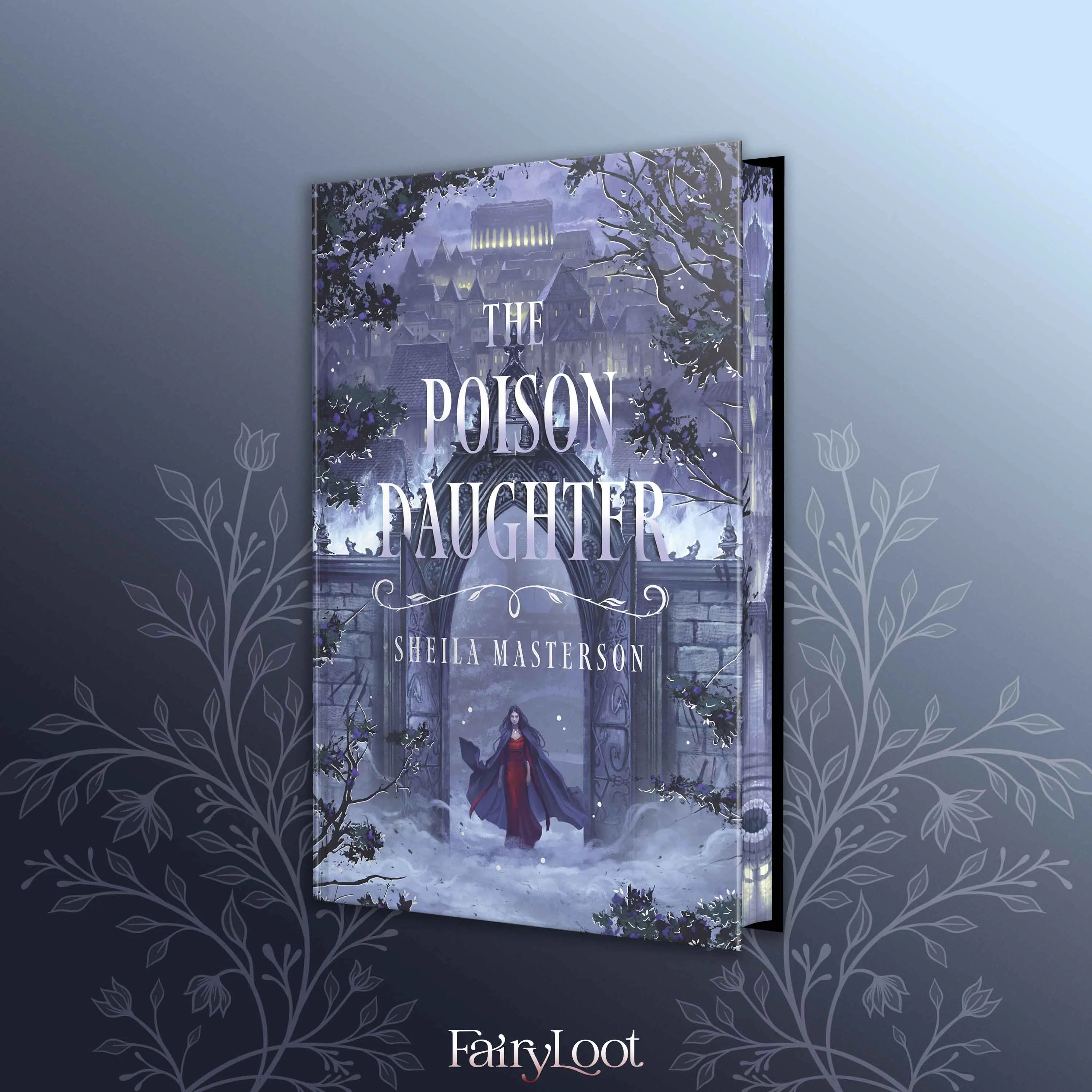
Dark & Delicious Gothic Fantasies to Sink Your Teeth Into
Jenni
14th October 2026
Follow Us
Most Recent Stories
Community Features
Dark & Delicious Gothic Fantasies to Sink Your Teeth Into
Jenni
14th October 2026
Follow Us
-

Community Features
Dark & Delicious Gothic Fantasies to Sink Your Teeth Into
Jenni
14th October 2026
-

-


Conversation
0 Comments