
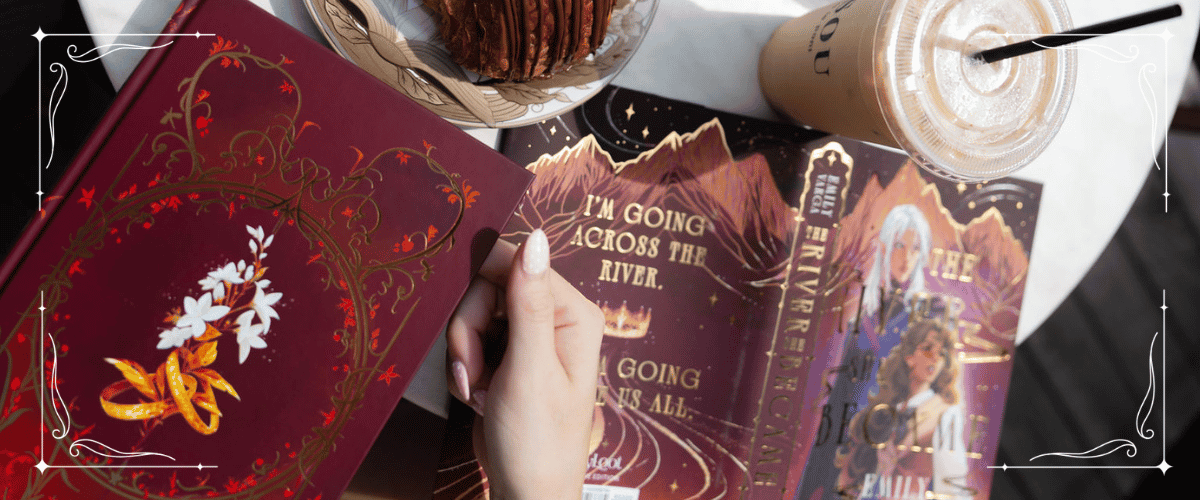
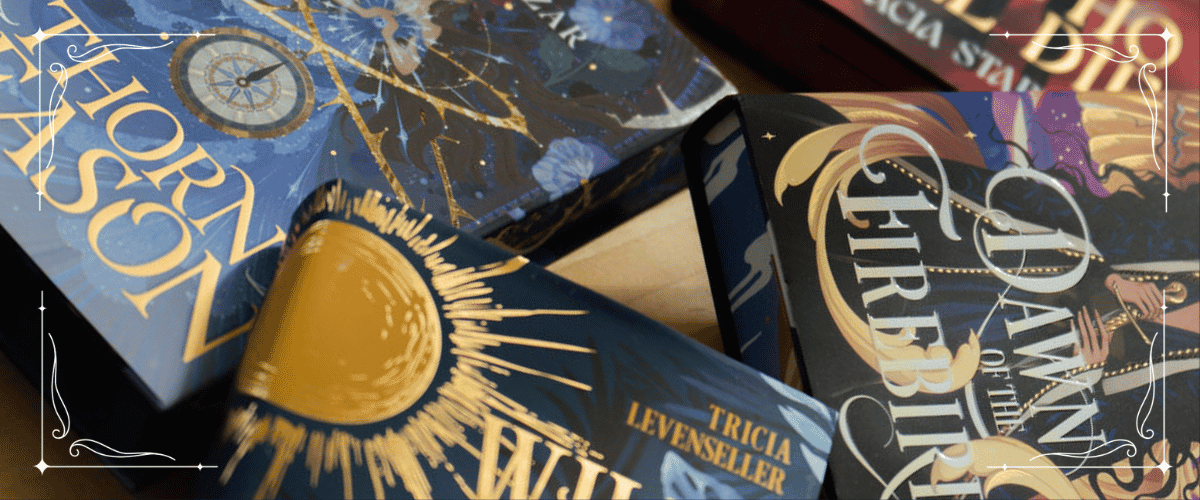

When you think of covers adorned with foiling, you probably think of modern special editions of books. Today, book lovers adore collecting beautifully ornate redesigns of the stories they hold dear. Almost like a trophy for their shelves, getting additional copies of their favourite tales that are embellished with unique artwork and gilded with metallics feels ever so precious. But the art of foiling is actually far older than many realise… ✨
Having allured readers for centuries, the story begins with gold tooling. And while its essence has remained a constant, its methods have changed drastically! Keep reading as we turn the pages of foiling history, discussing the trends and techniques we’ve seen change throughout time. 📜
14th Century
The magic of modern book cover foiling stems from the traditional hand-tooling and gold leaf bookbinding practices that were first established in Egypt and Syria during the late 1300s. What first began as gold paint being brushed into decorative indentations pressed onto leather covers, evolved into placing genuine gold leaf onto the surface and pressing heated hand tools on top to transfer the design. Each gold leaf impression was individually made with immaculate attention to detail, requiring significant skill and ample time. There in the Middle East, gorgeous geometric and intricate floral patterns were favoured.
15th Century
The practice then expanded to Western Europe, where gold tooling designs focused more-so on heraldic symbols and elaborate borders. The art continued to flourish during the Renaissance, with monasteries, libraries, and royal binders honing the craft. Because they were all designed and pressed by hand, every gold tooling piece was completely and utterly unique and prestigious.
19th Century
The 1800s marked a huge turning point in the history of book covers. Cloth materials and woven fabrics became the preferred choice for everyday publishing, replacing the previous expensive leather. This was to make books cheaper and more appealing to the public in which levels of literacy and reading for pleasure was growing amongst. Consequently, gold embossing became more sparingly used, predominantly to enhance and signal the value of particularly treasured manuscripts. Industrialisation allowed publishers to forgo the timely handmade processes in favour of mechanical heavy presses and engraved metal dies. These machines could stamp titles and decorative patterns at a commercial scale, making way for the switch from real gold leaf to metallic foils. While individuality and handmade work lacked, these processes became more efficient in speed and cost.
20th Century
For a while in this period of industrial dominance and technological advancement, a golden age emerged with many companies and artists creating mass-produced but complex designed multi-coloured foil embellishments. But due to the economic depression that followed World War I, it was short lived. Engraved metal dies and multi-plate foiling became too expensive, forcing leading publishers to make a shift towards the use of dust jackets. It was much more sustainable to keep book binding plain and print any desired artwork and decoration on the covering protective paper instead.
21st Century
And here we are in the present day, in a century that has seen an astounding resurgence in metallic foiling on not just hardback covers and dust jackets, but also on endpaper artwork! Gilded and glorious, foiling on special editions continues to wow readers and turns much loved stories into sought-after keepsakes.
Do you prefer gold or silver foiling, and which FairyLoot Exclusive Edition is your favourite example? Let us know in the comments! 💛 🩶
Blog Post Copied to Clipboard
Most Recent Stories

Follow Us
Most Recent Stories
Follow Us
Community Features
Gilded & Glorious — The History of Book Cover Foiling
Jenni
6th November 2026
Conversation
0 Comments